Segara Anak Lake and Hot Springs: Everything You Need to Know
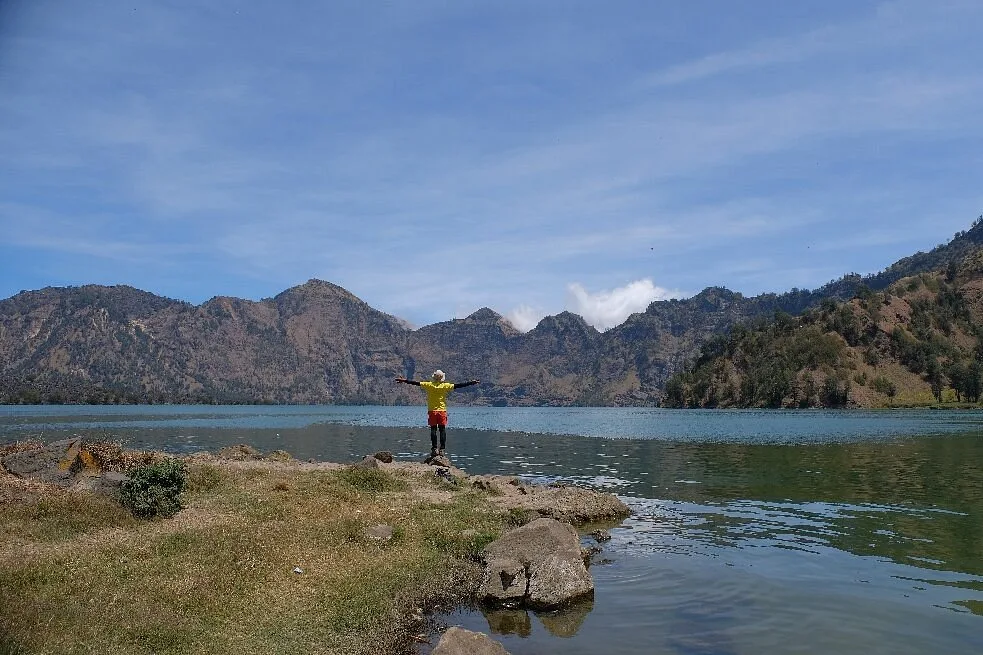
Hidden within the spectacular volcanic caldera of Mount Rinjani on Lombok Island, Segara Anak Lake and its natural hot springs are among Indonesia's most remarkable mountain attractions.
Surrounded by towering crater walls, dramatic volcanic landscapes, and the active volcanic cone of Mount Barujari, Segara Anak offers a unique combination of natural beauty, geological history, cultural significance, and outdoor adventure.
For many travelers, visiting the crater lake and relaxing near the natural hot springs are the highlights of their Mount Rinjani trekking experience.
Whether you are planning to climb Mount Rinjani's summit or explore its volcanic landscapes without reaching the highest peak, this article explains everything you need to know about Segara Anak Lake, its location, natural hot springs, trekking routes, and essential travel tips.
Where Is Segara Anak Lake Located?
Segara Anak Lake is located inside the volcanic caldera of Mount Rinjani National Park in Lombok, West Nusa Tenggara, Indonesia.
Situated approximately 2,000 meters above sea level, the lake is surrounded by steep mountain ridges and volcanic cliffs.
Unlike many tourist attractions in Lombok, Segara Anak Lake cannot be reached by car or motorcycle. Visitors must hike through Mount Rinjani National Park using officially designated trekking routes.
Segara Anak Lake at a Glance:
- Location: Mount Rinjani National Park, Lombok, Indonesia.
- Elevation: Approximately 2,000 meters above sea level.
- Surface area: Approximately 11 square kilometers.
- Maximum depth: Approximately 230 meters.
- Lake type: Volcanic crater lake.
- Nearby volcano: Mount Barujari.
- Main trekking access: Senaru, Sembalun, and Torean.
- Recommended trekking duration: 3–4 days.
- Access: Guided trekking through officially open routes.
The lake's remote location makes it one of Lombok's most rewarding natural destinations for adventurous travelers.
What Does Segara Anak Mean?
The name Segara Anak means "Child of the Sea."
The name refers to the lake's beautiful blue waters, which resemble the ocean despite being located high within a volcanic mountain.
When viewed from the Senaru or Sembalun Crater Rim, the lake creates a spectacular contrast with the surrounding volcanic cliffs, green mountain slopes, and dark volcanic formations.
Its appearance changes throughout the day depending on sunlight, cloud cover, and weather conditions.
The History and Formation of Segara Anak Lake
Segara Anak Lake was formed within the enormous volcanic caldera created by the catastrophic eruption of Mount Samalas in 1257.
The Samalas eruption is considered one of the largest volcanic eruptions of the past several thousand years, reaching a Volcanic Explosivity Index of 7.
The eruption released enormous quantities of volcanic ash, gases, pumice, and other materials into the atmosphere.
Following the eruption, part of the ancient volcanic mountain collapsed, creating a massive depression known as a caldera.
Over time, rainfall and natural water sources accumulated within the caldera, forming Segara Anak Lake.
Continued volcanic activity also created Mount Barujari, a younger volcanic cone that now rises beside the lake.
Today, the combination of the crater lake, active volcano, and surrounding mountain walls provides a remarkable example of how volcanic activity can transform natural landscapes.
Mount Barujari: The Active Volcano Beside Segara Anak Lake
Mount Barujari, also known as Gunung Baru Jari, is an active volcanic cone located inside the Mount Rinjani caldera.
The volcano developed through repeated eruptions following the formation of the Segara Anak caldera.
Mount Barujari has experienced several documented eruptions in modern history, including volcanic activity in 1994, 2004, 2009–2010, 2015, and 2016.
During some eruptions, lava flows reached Segara Anak Lake, changing parts of the surrounding landscape.
Mount Barujari remains an active volcano and is monitored by Indonesian volcanology authorities.
Visitors can admire the volcanic cone from designated trekking areas, but approaching restricted volcanic zones is prohibited for safety reasons.
Where Are the Mount Rinjani Hot Springs Located?
The natural hot springs of Mount Rinjani are located near Segara Anak Lake, within the volcanic caldera.
One of the best-known hot spring areas is Aik Kalak, where naturally heated water emerges from underground geothermal sources.
From the commonly used lakeside camping area, the hot springs can generally be reached within approximately 10–20 minutes on foot, depending on the campsite location and trail conditions.
The surrounding area features volcanic rocks, flowing warm water, natural pools, and small waterfalls.
After several hours of challenging mountain trekking, visiting the hot springs can provide a relaxing break.
Hot Springs Information:
- Location: Near Segara Anak Lake.
- Elevation: Approximately 2,000 meters above sea level.
- Water source: Natural geothermal activity.
- Walking time from the lakeside camping area: Approximately 10–20 minutes.
- Water temperature: Varies between pools and geothermal sources.
- Access: On foot through designated trekking paths.
Visitors should always follow their guide's instructions because access and water conditions can change.
Why Are the Segara Anak Hot Springs Naturally Warm?
The natural hot springs are associated with geothermal activity beneath the Mount Rinjani volcanic complex.
Rainwater and groundwater penetrate cracks and porous volcanic rocks beneath the surface.
As the water circulates underground, geothermal heat increases its temperature before it returns to the surface through natural springs.
The water may contain dissolved minerals acquired during its movement through underground rock formations.
This natural process creates the warm pools and geothermal features found near Segara Anak Lake.
Because the springs are part of an active volcanic environment, water temperatures and chemical composition can vary.
Benefits of Visiting the Mount Rinjani Hot Springs
Many trekkers enjoy visiting the hot springs after completing challenging sections of their Mount Rinjani adventure.
Soaking in comfortably warm water may provide several temporary benefits, including:
- Relaxation after long hours of hiking.
- Temporary relief from tired and stiff muscles.
- A peaceful break during a multi-day trek.
- An opportunity to enjoy the natural volcanic environment.
- A refreshing experience before continuing the journey.
Although local traditions sometimes associate the hot springs with healing properties, these claims should not be considered scientifically established medical benefits.
Visitors should avoid excessively hot pools, stay hydrated, and limit their soaking time.
Cultural and Spiritual Significance of Segara Anak Lake
Segara Anak Lake is not only a natural attraction but also a place of cultural and spiritual importance.
Mount Rinjani and its crater lake hold special significance for local Sasak communities and Balinese Hindu communities.
Traditional ceremonies and religious pilgrimages have taken place around the lake for generations.
Some visitors travel to Segara Anak for spiritual purposes, prayers, and traditional rituals.
Travelers should respect these cultural traditions by behaving appropriately, avoiding disturbances during ceremonies, and following local guidance.
Maintaining the cleanliness and peaceful atmosphere of the lake is an important responsibility for everyone visiting this sacred natural environment.
How to Get to Segara Anak Lake
Reaching Segara Anak Lake requires trekking through Mount Rinjani National Park.
There are three principal trekking routes associated with access to the lake: Senaru, Sembalun, and Torean.
Each route offers different landscapes, trekking challenges, and experiences.
Senaru Trekking Route
The Senaru route begins in Senaru Village on the northern slopes of Mount Rinjani.
Trekkers hike through dense tropical rainforest before reaching the Senaru Crater Rim at approximately 2,641 meters above sea level.
From the crater rim, the trail descends steeply toward Segara Anak Lake.
This descent generally takes approximately 2–3 hours, depending on fitness, weather, and trail conditions.
The Senaru route is particularly attractive for travelers who want to visit the crater lake without climbing Mount Rinjani's main summit.
Highlights of the Senaru route include tropical rainforest, mountain wildlife, panoramic crater views, and spectacular sunsets.
Sembalun Trekking Route
The Sembalun route begins in Sembalun Village on the eastern side of Mount Rinjani.
The trail passes through open savanna landscapes before climbing toward the Sembalun Crater Rim at approximately 2,639 meters above sea level.
Trekkers can attempt the main summit at 3,726 meters before descending toward Segara Anak Lake.
The descent from the Sembalun Crater Rim to the lake generally takes approximately 3–4 hours.
This route is ideal for experienced hikers who want to combine the Mount Rinjani summit, crater lake, and hot springs in one trekking adventure.
Torean Trekking Route
The Torean route connects the Segara Anak caldera with Torean Village in northern Lombok.
It is famous for its dramatic valley landscapes, waterfalls, mountain streams, steep cliffs, and lush vegetation.
Unlike the traditional crater rim routes, the Torean trail follows a valley system through the volcanic landscape.
Many trekkers choose Torean as their finishing route after visiting Segara Anak Lake.
Although the route offers extraordinary scenery, certain sections are narrow, exposed, and physically demanding.
Access depends on official national park regulations, weather conditions, and trail safety.
Best Mount Rinjani Trekking Packages to Visit Segara Anak Lake
Travelers who want to visit both Segara Anak Lake and the natural hot springs should generally choose a three-day or four-day trekking package.
Standard one-day and two-day crater rim or summit packages provide spectacular views of the lake but do not normally descend to the lakeside.
3 Days 2 Nights Sembalun to Senaru Trek
The 3-Day Mount Rinjani Sembalun to Senaru Trek is one of the most popular options for travelers seeking a comprehensive Mount Rinjani adventure.
The itinerary combines the main summit, Segara Anak Lake, natural hot springs, both crater rims, and the Senaru rainforest.
Trekkers normally visit the lake and hot springs on the second day before continuing to the Senaru Crater Rim for overnight camping.
This package is ideal for physically fit hikers who want to experience Mount Rinjani's main attractions within three days.
3 Days 2 Nights Sembalun to Torean Trek
The 3-Day Sembalun to Torean Trek combines the Sembalun Crater Rim, an optional summit climb, Segara Anak Lake, natural hot springs, and the spectacular Torean Valley.
Instead of climbing back toward the Senaru Crater Rim, trekkers continue through the dramatic valley landscapes toward Torean Village.
This package is an excellent choice for adventurous travelers who want to experience waterfalls, mountain streams, volcanic cliffs, and diverse natural scenery.
3 Days 2 Nights Senaru to Torean Trek Without Summit
The 3-Day Senaru to Torean Trek is designed for travelers who want to explore Segara Anak Lake and the natural hot springs without climbing Mount Rinjani's main summit.
The journey begins in Senaru Village, passes through tropical rainforest, and continues toward the Senaru Crater Rim before descending to the lake.
Trekkers then explore the volcanic valley and finish their adventure in Torean Village.
This package is particularly suitable for nature lovers and photographers who prefer scenic landscapes over summit achievements.
3 Days 2 Nights Second Summit Trek – Senaru to Torean
The 3-Day Second Summit Trek combines Mount Sangkareang, also known as Rinjani's Second Summit, with Segara Anak Lake, the natural hot springs, and Torean Valley.
At approximately 3,126 meters above sea level, Mount Sangkareang offers spectacular views of the volcanic caldera and surrounding mountains.
This itinerary provides an alternative to the traditional main summit trek while still offering a rewarding high-altitude adventure.
4 Days 3 Nights Sembalun to Senaru Trek
The four-day Sembalun to Senaru trekking package provides additional time to explore Mount Rinjani at a more comfortable pace.
Unlike the three-day itinerary, this extended adventure allows trekkers to spend a night beside Segara Anak Lake, depending on campsite availability and official regulations.
Visitors can enjoy more time around the lake and hot springs before continuing toward the Senaru Crater Rim.
This package is recommended for travelers who want to experience the main summit and crater lake without following an overly rushed itinerary.
4 Days 3 Nights Sembalun to Torean Trek
The 4-Day Sembalun to Torean Trek offers an extended mountain adventure combining the main summit, Segara Anak Lake, natural hot springs, and the spectacular Torean Valley.
With additional trekking time, visitors can appreciate the volcanic landscapes and enjoy a more relaxed schedule compared with shorter itineraries.
This private trekking adventure is ideal for couples, families, friends, and experienced hikers seeking a more personalized mountain experience.
Can You Visit Segara Anak Lake Without Climbing the Summit?
Yes, visiting Segara Anak Lake does not require climbing Mount Rinjani's main summit.
Several trekking itineraries allow visitors to descend into the caldera without attempting the 3,726-meter peak.
The three-day Senaru to Torean trek without summit is an excellent option for travelers who want to focus on the crater lake, hot springs, rainforest, waterfalls, and volcanic scenery.
However, skipping the summit does not make the trek easy.
Reaching Segara Anak Lake still requires significant elevation gain and descent, several hours of walking each day, and good physical fitness.
Can You Visit Segara Anak Lake in One Day?
Visiting Segara Anak Lake and returning on the same day is not recommended for most travelers.
The lake is located deep within the volcanic caldera, and reaching it requires a long mountain hike followed by a steep descent.
Returning from the lake involves additional climbing and a lengthy journey back to the village.
Travelers with only one day available should consider the One-Day Senaru Crater Rim Trek, which provides spectacular views of Segara Anak Lake from above without descending into the caldera.
For visitors who want to reach the lakeside and natural hot springs, a three-day or four-day trekking itinerary is generally more suitable.
Things to Do at Segara Anak Lake
Segara Anak Lake offers several opportunities to enjoy Mount Rinjani's natural environment.
Enjoy the Volcanic Scenery
The combination of blue lake water, towering crater walls, and Mount Barujari creates one of Indonesia's most distinctive mountain landscapes.
Visitors can relax beside the lake and appreciate the peaceful surroundings when weather conditions are favorable.
Visit the Natural Hot Springs
The nearby geothermal hot springs are among the most popular attractions for trekkers visiting the caldera.
Spending time in comfortably warm pools can provide a relaxing break after challenging mountain trails.
Camp Beside the Lake
Selected multi-day trekking itineraries include overnight camping near Segara Anak Lake.
Camping allows visitors to experience the changing mountain scenery throughout the evening and early morning.
On clear nights, the remote location may also offer excellent opportunities for stargazing.
Camping is only permitted in designated areas and is subject to national park regulations.
Photography
Segara Anak Lake is a remarkable destination for landscape photography.
Popular photography subjects include Mount Barujari, reflections on the lake, volcanic cliffs, morning mist, mountain sunsets, and the surrounding geothermal features.
Observe Local Traditions
Visitors may occasionally encounter local communities participating in traditional ceremonies or religious activities.
These experiences provide insight into the cultural importance of Mount Rinjani.
Always observe respectfully and ask permission before photographing religious ceremonies.
Can You Swim in Segara Anak Lake?
Although Segara Anak Lake may look inviting, swimming is not recommended without confirmation that it is permitted and safe.
The lake is deep, and water temperatures, underwater conditions, volcanic activity, and weather can create unexpected hazards.
Visitors should avoid swimming alone, jumping from rocks, or entering unfamiliar areas of the lake.
The nearby designated hot spring pools generally provide a more suitable place to enjoy the water when conditions permit.
Always follow the advice of your trekking guide and national park authorities.
Can You Camp at Segara Anak Lake?
Yes, overnight camping near Segara Anak Lake is possible as part of selected multi-day trekking itineraries when designated campsites are open.
Camping beside the lake provides an opportunity to enjoy the volcanic landscape at a more relaxed pace.
However, not every trekking package includes lakeside camping.
For example, the standard three-day Sembalun to Senaru itinerary generally includes a visit to the lake before continuing to the Senaru Crater Rim for the second night.
A four-day trekking package is a better option for travelers who specifically want to spend a night beside Segara Anak Lake.
Best Time to Visit Segara Anak Lake and Hot Springs
The best time to visit Segara Anak Lake is generally during Lombok's dry season, particularly from May to October.
During these months, visitors are more likely to experience favorable trekking conditions, clearer mountain views, and relatively dry trails.
April to June
This period often features greener landscapes following the rainy season.
It can be an excellent time to enjoy the rainforest, mountain vegetation, and volcanic scenery.
July to September
These months are generally among the busiest trekking periods on Mount Rinjani.
Weather conditions are often favorable, although strong winds and cold nighttime temperatures remain possible.
Advance booking is recommended during the peak season.
October to December
October can still provide favorable trekking conditions, but rainfall generally increases toward November and December.
Steep trails around the caldera may become slippery, and landslide risks can increase during heavy rainfall.
During the rainy season, shorter trekking itineraries may be more suitable than routes descending into the lake.
January to March
Mount Rinjani National Park typically closes trekking activities during this period for safety and environmental recovery.
Official opening and closing dates may vary each year.
Travelers should always confirm current trekking conditions before making travel arrangements.
How Difficult Is the Trek to Segara Anak Lake?
Trekking to Segara Anak Lake is considered physically demanding.
Although the lake is located approximately 2,000 meters above sea level, trekkers must often climb to a higher crater rim before descending into the caldera.
Depending on the itinerary, they may also need to climb out of the caldera before returning to a village.
The main challenges include:
- Long trekking distances.
- Steep uphill and downhill sections.
- Rocky and uneven volcanic trails.
- Significant elevation changes.
- Slippery surfaces during rainfall.
- Cold mountain temperatures.
- Physical fatigue during multi-day trekking.
Travelers should prepare through regular hiking, cardiovascular exercise, and leg-strength training before attempting the trek.
Previous mountain trekking experience is helpful, especially for itineraries that include the main summit.
What to Bring When Visiting Segara Anak Lake
Packing suitable equipment is essential for a comfortable and safe trekking adventure.
Recommended personal items include:
- Comfortable hiking shoes with good grip.
- A suitable trekking backpack.
- Warm jacket and thermal clothing.
- Waterproof jacket or raincoat.
- Trekking trousers.
- Extra clothing and socks.
- Swimwear for designated hot spring pools.
- Quick-drying towel.
- Sunscreen and sunglasses.
- Headlamp and spare batteries.
- Trekking poles.
- Reusable drinking water bottle.
- Personal medication.
- Waterproof bags for electronic devices.
- Personal hygiene products.
Jou Trekking provides warm jackets, trekking poles, headlamps, and gloves for guests to borrow free of charge on overnight trekking adventures.
Camping equipment, scheduled meals, drinking water, guides, and standard porter services are included in overnight trekking packages.
Safety Tips for Visiting Segara Anak Lake and Hot Springs
Segara Anak Lake is located within an active volcanic environment, and visitors should always prioritize safety.
Before and during your trekking adventure:
- Check official national park opening announcements.
- Trek with an experienced local guide.
- Follow designated trekking trails.
- Avoid restricted volcanic areas.
- Check weather and volcanic activity updates.
- Wear suitable hiking shoes.
- Stay hydrated throughout the trek.
- Avoid entering excessively hot geothermal pools.
- Do not drink untreated lake or hot spring water.
- Avoid swimming in unfamiliar or restricted areas.
- Follow your guide's emergency instructions.
- Arrange suitable travel insurance covering high-altitude trekking and emergency evacuation.
Weather and volcanic conditions can change unexpectedly, making flexibility an important part of any Mount Rinjani adventure.
Responsible Tourism at Segara Anak Lake
Segara Anak Lake is a protected natural environment within Mount Rinjani National Park and the Rinjani-Lombok UNESCO Global Geopark.
Every visitor has a responsibility to help preserve its natural beauty.
Responsible trekking practices include:
- Carrying all rubbish back from the mountain.
- Avoiding single-use plastics whenever possible.
- Never leaving food packaging beside the lake.
- Avoiding soap and shampoo in natural water sources.
- Using designated toilet facilities.
- Respecting wildlife and vegetation.
- Camping only in designated areas.
- Respecting local religious traditions.
- Following national park conservation regulations.
Protecting the lake ensures that future generations can continue to experience this extraordinary volcanic landscape.
Frequently Asked Questions About Segara Anak Lake and Hot Springs
Where is Segara Anak Lake located?
Segara Anak Lake is located inside the volcanic caldera of Mount Rinjani National Park on Lombok Island, Indonesia, approximately 2,000 meters above sea level.
How deep is Segara Anak Lake?
The lake has a reported maximum depth of approximately 230 meters.
How big is Segara Anak Lake?
Segara Anak Lake covers an area of approximately 11 square kilometers.
Where are the Mount Rinjani hot springs?
The natural hot springs are located near Segara Anak Lake, within the Mount Rinjani caldera. One of the best-known hot spring areas is Aik Kalak.
How far are the hot springs from Segara Anak Lake?
The hot springs are generally approximately 10–20 minutes on foot from the commonly used lakeside camping area, depending on the campsite and trail conditions.
Are the Mount Rinjani hot springs naturally heated?
Yes. The hot springs are heated by geothermal activity beneath the Mount Rinjani volcanic complex.
Do you need to pay extra to visit the hot springs?
Visiting the hot springs is generally part of trekking itineraries that include Segara Anak Lake. Travelers should confirm package inclusions and any applicable local charges before departure.
Can beginners visit Segara Anak Lake?
Physically fit beginners may be able to visit Segara Anak Lake with appropriate preparation, an experienced guide, and a suitable itinerary. However, the steep trails make it a challenging trekking destination.
Can you visit Segara Anak Lake without reaching the summit?
Yes. The Senaru to Torean trekking route without summit is an excellent alternative for travelers who want to visit the lake and hot springs without climbing Mount Rinjani's main peak.
Can you see Segara Anak Lake without hiking down to it?
Yes. Both the Senaru Crater Rim and Sembalun Crater Rim offer spectacular panoramic views of the lake.
How many days do you need to visit Segara Anak Lake?
A three-day trekking package is generally suitable for visiting the lake and hot springs. A four-day itinerary is recommended for travelers who prefer a more comfortable pace and additional time at the lake.
Is Mount Barujari still active?
Yes. Mount Barujari remains an active volcanic cone within the Mount Rinjani caldera. Its volcanic activity is monitored by Indonesian authorities.
Is Segara Anak Lake safe to visit?
Segara Anak Lake can be visited when national park trekking routes are officially open and volcanic and weather conditions permit. Visitors should always follow official safety recommendations.
Explore Segara Anak Lake and Hot Springs with Jou Trekking
Jou Trekking is a local trekking operator based in Senaru Village, Lombok, offering guided Mount Rinjani adventures through Senaru, Sembalun, and Torean.
Our trekking packages are designed for travelers with different fitness levels, available time, and adventure preferences.
Guests can benefit from:
- Small trekking groups with a maximum of four participants.
- Experienced local trekking guides.
- Professional porter teams.
- National park entrance permits.
- Camping equipment.
- Meals and unlimited drinking water during overnight treks.
- Free trekking equipment.
- Free luggage storage in Senaru.
- Private trekking options.
- Transportation and accommodation packages.
Whether you want to climb Mount Rinjani's main summit, explore the Second Summit, or visit Segara Anak Lake without a summit climb, you can choose from our Mount Rinjani trekking packages to find an itinerary that suits your travel plans.
Conclusion
Segara Anak Lake and its natural hot springs are among the most extraordinary attractions within Mount Rinjani National Park.
Formed through centuries of volcanic activity, the lake offers a remarkable combination of geological history, dramatic mountain scenery, geothermal features, and cultural significance.
From relaxing near the natural hot springs to camping beside the crater lake and admiring the active Mount Barujari volcano, visiting Segara Anak is an unforgettable part of a Mount Rinjani trekking adventure.
Whether you choose a three-day scenic trek without the summit or a four-day adventure combining the summit, crater lake, and surrounding valleys, proper preparation and responsible trekking are essential.
With an experienced local trekking team, suitable equipment, and respect for the mountain environment, you can discover one of Lombok's most spectacular natural wonders.