Complete Guide to Climbing Mount Rinjani
Complete Guide to Climbing Mount Rinjani
Mount Rinjani is one of Indonesia’s most spectacular trekking destinations. Located on the island of Lombok, this active volcano rises to 3,726 meters above sea level, making it the second-highest volcano in Indonesia.
From breathtaking sunrise views and dramatic volcanic landscapes to the beautiful Segara Anak crater lake, climbing Mount Rinjani offers an unforgettable adventure for nature lovers and experienced hikers.
However, trekking Mount Rinjani requires proper preparation, physical fitness, and careful planning. This complete guide covers everything you need to know before starting your adventure.
- Where Is Mount Rinjani?
Mount Rinjani is located in northern Lombok, West Nusa Tenggara, Indonesia. The mountain is part of Mount Rinjani National Park and the Rinjani-Lombok UNESCO Global Geopark.
The mountain is famous for its diverse landscapes, including tropical rainforests, open savannahs, volcanic ridges, natural hot springs, and the stunning Segara Anak Lake.
The main trekking gateways are Sembalun, Senaru, and Torean.
- Best Time to Climb Mount Rinjani
The best time to climb Mount Rinjani is generally between April and October, when weather conditions are more favorable.
- April to May: Green landscapes and relatively pleasant temperatures, although occasional rain is possible.
- June to August: Generally drier weather, clear views, and the busiest trekking season.
- September to October: Good trekking conditions with potentially fewer visitors.
- November to December: Increasing rainfall, slippery trails, and unpredictable mountain weather.
Mount Rinjani National Park is typically closed from January through March for safety and environmental recovery.
Always check the latest national park announcements and weather forecasts before booking your trek.
- Mount Rinjani Trekking Routes
Choosing the right trekking route depends on your fitness level, available time, and what you want to experience.
Sembalun Trekking Route
The Sembalun route is the most popular starting point for hikers aiming to reach Mount Rinjani’s summit.
The trail passes through open grasslands before climbing steeply toward Sembalun Crater Rim at approximately 2,639 meters above sea level.
This route is ideal for trekkers whose main goal is reaching the 3,726-meter summit.
Senaru Trekking Route
The Senaru route takes hikers through dense tropical rainforest before reaching Senaru Crater Rim at approximately 2,641 meters.
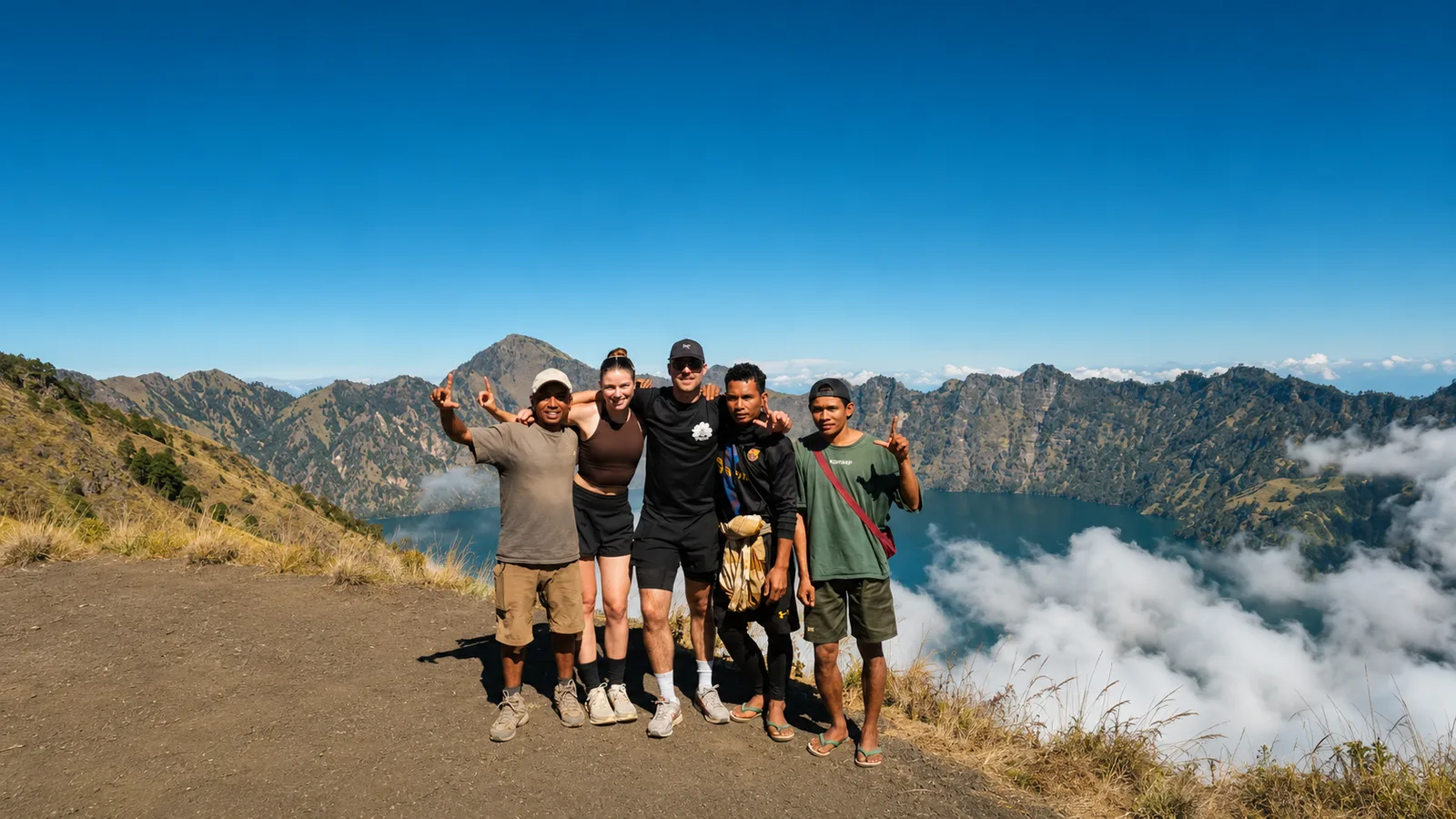
From the crater rim, trekkers can enjoy spectacular views of Segara Anak Lake, Mount Barujari, and the surrounding volcanic landscape.
It is an excellent option for travelers who want to experience Mount Rinjani without attempting the main summit.
Torean Trekking Route
The Torean route is known for its dramatic valleys, waterfalls, rivers, and lush mountain scenery.
It is commonly used as a descent route after visiting Segara Anak Lake. Although incredibly scenic, some sections are steep, narrow, and exposed.
The route should only be attempted when officially open and weather conditions are suitable.
- Choosing the Best Mount Rinjani Trekking Package
Several trekking itineraries are available depending on your experience and travel schedule.
2 Days 1 Night Mount Rinjani Summit Trek
The "2 Days 1 Night Mount Rinjani Summit Trek" (https://joutrekking.com/mount-rinjani-summit-2-day-trek/) starts from Sembalun and is designed for physically fit hikers who want to reach the summit in a limited amount of time.
Highlights include:
- Sembalun savannah landscapes
- Camping at Sembalun Crater Rim
- Sunrise from Mount Rinjani’s summit
- Panoramic views of Lombok and surrounding islands
This is a challenging trek that requires good endurance.
2 Days 1 Night Senaru Crater Rim Trek
The "2 Days 1 Night Senaru Crater Rim Trek" (https://joutrekking.com/mount-rinjani-2-days-1-night-senaru-crater-rim/) is suitable for travelers who prefer spectacular crater views without climbing to the main summit.
Highlights include:
- Tropical rainforest trekking
- Camping above Segara Anak Lake
- Beautiful sunset and sunrise views
- Views of Mount Barujari
Although less demanding than the summit trek, it still requires reasonable physical fitness.
3 Days 2 Nights Mount Rinjani Trek
The "3 Days 2 Nights Mount Rinjani Trek via Sembalun and Senaru" (https://joutrekking.com/mount-rinjani-3-days-2-nights-trekking-sembalun-senaru/) offers a more complete Mount Rinjani experience.
Depending on the selected route, hikers can experience:
- Mount Rinjani summit
- Sembalun Crater Rim
- Segara Anak Lake
- Natural hot springs
- Senaru or Torean trekking trails
This itinerary is recommended for experienced and physically prepared hikers who want to explore more of the national park.
4 Days 3 Nights Mount Rinjani Trek
The four-day itinerary allows trekkers to explore Mount Rinjani at a more comfortable pace.
It provides additional time for recovery, enjoying the scenery, and exploring the crater lake and surrounding landscapes.
However, the trek remains physically demanding and requires proper preparation.
Mount Rinjani Second Summit Trek
Mount Sangkareang, commonly known as Rinjani’s Second Summit, reaches approximately 3,126 meters above sea level.
This alternative offers spectacular mountain views and a generally quieter trekking experience than the main summit route.
It is a great choice for hikers looking for a different Mount Rinjani adventure.
You can compare all our "Mount Rinjani trekking packages" (https://joutrekking.com/trekking-packages/) to find an itinerary that matches your fitness level, travel schedule, and personal preferences.
- How Difficult Is Climbing Mount Rinjani?
Mount Rinjani is considered a challenging mountain trek.
The difficulty comes from several factors:
- Long hiking distances
- Significant elevation gain
- Steep and uneven trails
- Loose volcanic sand and gravel
- Cold temperatures at higher elevations
- Reduced oxygen availability at altitude
- Rapidly changing weather conditions
The final summit ascent is particularly demanding because of the steep volcanic terrain and loose gravel.
Previous hiking experience is highly recommended for anyone attempting the main summit.
For a more detailed explanation of trail conditions, physical challenges, and fitness requirements, read our guide on "how hard it is to climb Mount Rinjani" (https://joutrekking.com/blog/mount-rinjani-trek-difficulty-how-hard-is-it-to-climb-mount-rinjani/).
Reaching the summit should never be prioritized over personal safety. Always follow your guide’s advice and be prepared to turn back if necessary.
- How to Prepare for Mount Rinjani
Preparing several weeks before your trek can significantly improve your experience.
Recommended training includes:
- Regular uphill hiking
- Stair climbing
- Cardiovascular exercises
- Leg strengthening exercises
- Long-distance walking
- Hiking with a backpack
Ideally, begin training four to eight weeks before your trip, depending on your current fitness level.
Getting enough sleep, staying hydrated, and allowing time to recover before the trek are equally important.
- What to Pack for Mount Rinjani
Mountain temperatures can change significantly between daytime and nighttime.
Essential trekking equipment includes:
- Comfortable hiking shoes with good grip
- Warm jacket
- Waterproof jacket
- Trekking pants
- Thermal clothing
- Headlamp
- Trekking poles
- Gloves and warm hat
- Sunscreen and sunglasses
- Personal water bottle
- Personal medication
- Small trekking backpack
- Power bank
- Personal hygiene supplies
At Jou Trekking, jackets, headlamps, trekking poles, and gloves are available free of charge for our trekking guests.
We recommend confirming equipment availability and package inclusions before departure.
- Mount Rinjani Trekking Permits and Guides
All trekkers entering Mount Rinjani National Park must have a valid trekking permit and comply with national park regulations.
International visitors generally need to provide their full name, passport number, and nationality for permit registration.
Daily visitor quotas apply, so booking in advance is recommended, especially during the peak trekking season.
Climbing with an experienced local guide and professional trekking team helps ensure proper navigation, logistical support, and a safer mountain experience.
- What to Expect During a Mount Rinjani Trek
A typical overnight trekking package includes mountain camping, meals, drinking water, and support from guides and porters.
Porters generally carry shared camping equipment and food supplies, while trekkers carry their personal belongings unless a personal porter has been arranged.
Camping facilities are basic, and temperatures can become very cold at night.
Mobile phone reception is limited in some areas, and access to electricity and modern facilities is generally unavailable along the trekking routes.
- Is Climbing Mount Rinjani Safe?
Mount Rinjani is an active volcano and a high-altitude trekking destination. Like any mountain adventure, it involves risks.
Potential hazards include heavy rainfall, slippery trails, falling rocks, exhaustion, altitude sickness, and extreme weather.
To reduce these risks:
- Choose an experienced trekking operator.
- Check weather conditions before departure.
- Wear appropriate hiking equipment.
- Stay hydrated and maintain a comfortable pace.
- Follow your guide’s instructions.
- Stop ascending if you develop symptoms of altitude sickness. Descend promptly if symptoms worsen or become severe.
- Purchase suitable travel and trekking insurance.
Your insurance should cover trekking up to 3,726 meters and emergency evacuation, including helicopter evacuation where available.
Safety should always come before reaching the summit.
- How Much Does It Cost to Climb Mount Rinjani?
The cost of climbing Mount Rinjani depends on several factors, including:
- Trekking duration
- Selected trekking route
- Group size
- Private or shared trekking arrangements
- Transportation and accommodation
- National park entrance fees
- Equipment and additional services
At Jou Trekking, we offer two booking options for selected trekking packages:
Trek Only: Suitable for travelers who arrange their own transportation and accommodation before the trek.
Trek + Transportation & Accommodation: Suitable for travelers who prefer a more convenient arrangement, including transportation and accommodation before the trek. A minimum of two participants is required.
Solo travelers can book a Trek Only package when an existing group is available to join.
For current prices, detailed itineraries, and package inclusions, visit our "Mount Rinjani trekking packages and prices" (https://joutrekking.com/trekking-packages/).
- How to Get to Mount Rinjani
Most international travelers reach Lombok by flying into Lombok International Airport or taking a fast boat from Bali or the Gili Islands.
Popular departure locations include Kuta Lombok, Senggigi, Mataram, Bangsal Harbor, and Tetebatu.
Senaru and Sembalun are the main villages for organizing Mount Rinjani trekking adventures.
We recommend arriving at least one day before your trek to rest, prepare your equipment, and attend a trekking briefing.
- Responsible Trekking on Mount Rinjani
Mount Rinjani is an important natural and cultural destination that deserves protection.
Every visitor can contribute to preserving the mountain by:
- Carrying all rubbish back down the mountain
- Avoiding unnecessary single-use plastics
- Staying on designated trekking trails
- Respecting wildlife and vegetation
- Respecting local traditions and sacred places
- Supporting local guides and porters
Responsible trekking helps preserve Mount Rinjani for future generations.
- Frequently Asked Questions
Can beginners climb Mount Rinjani?
Physically fit beginners may consider the Senaru Crater Rim trek. The main summit trek is significantly more demanding and is better suited to well-prepared hikers.
How long does it take to climb Mount Rinjani?
Most overnight trekking itineraries take between two and four days, depending on the selected route and destinations.
How cold is Mount Rinjani at night?
Temperatures at the crater rim and summit can approach freezing, particularly during the dry season. Strong winds can make conditions feel even colder.
Can I climb Mount Rinjani as a solo traveler?
Yes. Solo travelers can join an available trekking group or arrange a private trek, subject to operator availability.
Do I need trekking insurance?
Comprehensive trekking insurance is strongly recommended. Make sure your policy covers high-altitude hiking and emergency evacuation.
Is Mount Rinjani worth climbing?
Absolutely. For properly prepared hikers, Mount Rinjani offers extraordinary volcanic scenery, spectacular sunrise views, and one of Indonesia’s most memorable mountain adventures.
- Why Climb Mount Rinjani with Jou Trekking?
Based in Senaru, Lombok, Jou Trekking specializes in small-group and private Mount Rinjani trekking experiences.
Our approach focuses on personalized service, responsible trekking, and guest safety.
- Small groups with a maximum of four trekkers
- Experienced local guides and porters
- Quality camping equipment
- Complimentary essential trekking equipment
- Free luggage storage at our Senaru office
- Flexible transportation and accommodation options
- Responsible mountain trekking practices
Whether you want to reach the summit, explore Segara Anak Lake, or enjoy the spectacular views from Senaru Crater Rim, we offer different itineraries to suit your adventure.
Plan Your Mount Rinjani Adventure
Climbing Mount Rinjani is more than reaching a mountain summit. It is an opportunity to experience Lombok’s extraordinary natural beauty, discover volcanic landscapes, and challenge yourself in one of Indonesia’s most remarkable destinations.
Choose the right trekking route, prepare properly, and travel with an experienced local trekking team.
Explore our "Mount Rinjani trekking packages" (https://joutrekking.com/trekking-packages/) and start planning your next adventure with Jou Trekking.